Ceramic Dog Bowls: Why Choose Ceramic for Your Pet’s Bowl? – Material Advantages and Production Process
Choosing the right feeding bowl for your dog is a key part of caring for their daily health and comfort, and ceramic has emerged as a top choice among pet owners seeking a balance of safety, functionality and aesthetics. Unlike plastic or stainless steel alternatives, ceramic dog bowls offer unique benefits that make them stand out, backed by a meticulous production process that ensures reliability and quality.

Ceramic dog bowls are prized first and foremost for their safety and non-toxic properties, crafted from food-grade kaolin and finished with lead-free, cadmium-free glazes that undergo high-temperature firing up to 1350°C to form a stable, non-porous structure. Unlike plastic bowls, which can leach BPA or phthalates when scratched or heated, ceramic options are safe for all dogs—from puppies to seniors.
Their non-porous surface also prevents bacteria, mold and odor buildup, making them easy to clean and often dishwasher-safe. Their natural weight keeps them stable even for enthusiastic eaters, while high-temperature firing ensures they are scratch and fade-resistant, reducing the need for frequent replacements and lowering long-term costs.
Beyond practicality, ceramic bowls are pet-friendly, with a smooth glaze that is gentle on dogs’ mouths, temperature regulation to keep water cool in summer and retain mild warmth for wet food in winter, and a range of diverse designs that blend seamlessly with home decor, even doubling as small decorative pieces.
The quality of ceramic dog bowls is rooted in their elaborate production process, starting with the selection of premium, impurity-free kaolin that is crushed, mixed with water, kneaded to remove air bubbles and aged to enhance plasticity. Molding is done through two main methods—slip casting for mass-produced, uniform bowls and hand crafting for small-batch, unique pieces—with the molded “greenware” dried for 24 to 48 hours to prevent cracks during firing.

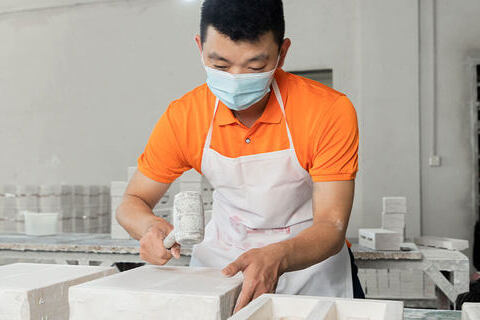
Next, the dry greenware is trimmed to remove excess clay, smooth mouth-friendly edges and polish surfaces in preparation for glazing, where a mineral-based glaze slurry is applied via dipping, spraying or brushing, with safe underglaze or in-glaze decorations and plain food-grade glaze for inner surfaces before re-drying.
The bowls then undergo two rounds of high-temperature firing: a bisque firing at 800°C to harden the clay, followed by a glaze firing at 1200 to 1350°C to fuse the clay and glaze into a non-porous structure, with strict temperature control to avoid defects. Finally, each bowl is hand-inspected for cracks, uneven glaze and heavy metal leaching, with qualified products polished, cleaned and packaged to reach pet owners.
For pet owners prioritizing their furry friends’ well-being and home aesthetics, ceramic dog bowls offer an unbeatable combination of safety, durability and style. Their meticulous production process ensures consistent quality, making them a worthwhile and reliable choice for daily pet feeding needs.